Showing posts with label stereotyping. Show all posts

Saturday, 3 August 2013

Boys Don’t Cry, But They Can Be Sensitive! Behavioural Descriptions of Counterstereotypical People Cause Greater Prejudice than Personality Descriptions

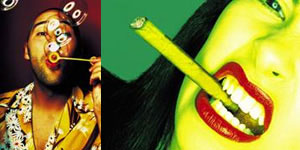
Stereotypes are pretty useful things! We use them to help us to understand and respond to people from a large and diverse array of social groups. But how do people feel about individuals who buck the trend and contradict stereotypes? For example, how do people feel about a man who is crying or a woman who is smoking a cigar!

Most evidence shows that people react quite negatively towards counterstereotypical individuals. The typical explanation for this negative bias refers to people’s need to protect and maintain their stereotypes: People are biased against counterstereotypical individuals because they disconfirm stereotypes and threaten people’s need to maintain stable and coherent stereotype systems.

However, recent social psychological research has provided some hope for counterstereotypical people. This new evidence shows that, although counterstereotypical individuals are disliked when they are described using behaviours, they are actually liked when they are described using personality traits. So, for example, although people may dislike “a man who is crying”, they like “a sensitive man”. In both cases, the man is counterstereotypical because he contradicts a gender stereotype. However, in the former case he is described using a behavior (“crying”) and in the latter case he is described using a personality trait (“sensitive”). Notably, this linguistic description effect occurs even when the particular valence of the words that are used (positive/negative) is taken into account.

So, why does this linguistic description effect occur? Well, it’s possible that counterstereotypical individuals are evaluated relatively negatively when they are described using behaviours because this linguistic description promotes a deeper, more systematic processing of the person that highlights their stereotype disconfirmation and, as we know, people don’t like individuals who step out of line with their stereotypes! In contrast, counterstereotypical individuals may be evaluated relatively positively when they are described using personality traits because this linguistic description promotes a more superficial type of processing that highlights individuals’ uniqueness, and people tend to value uniqueness.

How is all this relevant to you? Well, if you stop for a minute and consider your own social categories (i.e., your gender, religion, occupation, age group, political orientation, etc), then I’m sure you’ll find at least one in which your own characteristics contradict your group’s stereotype. Now don’t worry – it's often good to be the black sheep! Throughout the ages, counterstereotypical people have been the agents of beneficial social change. For example, independent women (who were counterstereotypical for their time) spearheaded the Feminist movement. In addition, the diversity embodied by counterstereotypical people brings with it a wealth of positive outcomes in work and organisational contexts. So, you should feel proud if you’re different from the rest of your group. The trick is to get other people to appreciate you for your uniqueness, rather than to denigrate you for your deviance. And describing yourself in terms of personality traits rather than behaviours may provide one way to do this.

For further information, please see the following journal article:

Rubin, M., Paolini, S., & Crisp, R. J. (2013). Linguistic description moderates the evaluations of counterstereotypical people. Social Psychology, 44 (4), 289-298 DOI: 10.1027/1864-9335/a000114

For a self-archived version of this article, please see here.

This research was supported by the Australian Research Council's Discovery Projects funding scheme (Project DP0556908). However, the views expressed above are not necessarily those of the Australian Research Council.

WZ2URKDKMN2A 

Tuesday, 4 December 2012

“They’re all the Same!”...But for Several Different Reasons


People often get confused between members of the same social group because “they all look the same!” In a recent review, Constantina Badea and I looked at the various reasons for this group homogeneity effect.
 
One reason is that group members actually do look the same as one another: Try identifying the culprit in a line-up of the Queen’s Guards!

Another reason is that people, especially Westerners, are motivated to perceive people in their own groups as individuals. This perceived in-group heterogeneity lets you express your individuality and distance yourself from your group's negative aspects.

It also matters what kind of group is being judged. There is a tendency to judge people in small groups, low status groups, and low power groups as being relatively similar to one another.

Finally, it matters what dimensions are being used to judge the groups. Group members tend to be rated as being similar to one another when they are judged on stereotypical dimensions as opposed to nonstereotypical or counterstereotypical dimensions (e.g., men judged on the dimension “adventurous” rather than "sensitive").

So, whether or not “they all look the same” depends on their actual variability, whether you are one of them, how numerous and powerful they are, and what kind of dimensions you’re judging them on.

For further information, please see the following journal article: Rubin, M., & Badea, C. (2012). They're All the Same!. . . but for Several Different Reasons: A Review of the Multicausal Nature of Perceived Group Variability Current Directions in Psychological Science, 21 (6), 367-372 DOI: 10.1177/0963721412457363

A self-archived version of this paper is available here.

Please click here for a collection of research papers investigating perceived group variability.

Monday, 3 December 2012

The Disproportionate Influence of Negative Intergroup Encounters on Prejudice

Back in February, I wrote about some research in which my colleagues and I showed that negative experiences with people from other groups are better at drawing attention to the people's group memberships than positive experiences (Paolini, Harwood, & Rubin, 2010). In other words, if you have a negative encounter with someone from another group, then you are more likely to think about their group memberships (e.g., their gender, race, nationality, etc.) than if you have a positive encounter with them. This increased awareness of a person's group memberships following a negative encounter with them is potentially problematic for the goal of reducing intergroup conflict in society because it means that people are naturally biased towards attributing bad things to out-group members' groups and generalizing their negative experiences with one out-group member to all of the other out-group members. Our preliminary evidence provided some support for this assumption, showing that people were more likely to mention a woman's ethnicity when she behaved negatively rather than positively. However, we did not go as far as testing whether this out-group salience effect led to greater prejudice against the out-group.

Now, Fiona Barlow and colleagues have found this missing piece of the puzzle in a series of research studies published this week (Barlow, Paolini, Pedersen, Hornsey, Radke, Harwood, Rubin, & Sibley, 2012). We looked at prejudice against Black Australians, Muslim Australians, and asylum seekers and found that negative experiences with these people were a stronger and more consistent predictor of negative attitudes towards them than positive experiences were of positive attitudes. For example, negative experiences, but not positive experiences, with Black Americans predicted suspicion about Barack Obama’s birthplace, which represents a subtle measure of racism.
  
These results suggest that negative experiences with out-group members are not only more likely than positive experiences to make people think about out-group members' group memberships, but also to influences people's attitudes towards the out-groups. Taken together, these two recent papers suggest that negative experiences with out-group members have a greater potential than positive experiences to influence people's thoughts and feelings about out-groups. This work implies that we should redouble our efforts to encourage positive experiences between members of different groups because this positive intergroup contact is naturally disadvantaged against improving intergroup relations when compared with the more powerful influence of negative intergroup contact.

For further information, please see the following journal article:  Barlow, F., Paolini, S., Pedersen, A., Hornsey, M., Radke, H., Harwood, J., Rubin, M., & Sibley, C. (2012). The Contact Caveat: Negative Contact Predicts Increased Prejudice More Than Positive Contact Predicts Reduced Prejudice Personality and Social Psychology Bulletin, 38 (12), 1629-1643 DOI: 10.1177/0146167212457953

Friday, 30 March 2012

And the Winners Are...All the Same! Why Winning Groups Are Stereotyped


In some recent research, my colleagues and I investigated whether people stereotype winning groups more than losing groups. In other words, do people perceive the members of winning groups to be more similar to one another than the members of losing groups? Traditionally, social psychologists have assumed that it is low status groups, low power groups, and minority groups that bear the brunt of stereotyping with more positive, high status, high power, majority groups being considered as unique individuals. In our research, we challenged this prevailing view. We predicted that, in the context of a competition between groups, winning groups would be stereotyped more than losing groups because people have an implicit understanding that uniformity, group cohesiveness, and co-ordination are associated with better group performance.

To test our prediction, we asked 175 research participants to view the photographs of four women who were ostensibly part of a team of fashion designers. We told half of our participants that the team had won a fashion design competition and the other half that the team had lost the competition. We then asked participants to indicate how much they agreed or disagreed with a series of statements that related to the similarity between the fashion designers (e.g., “Generally, the fashion designers...are similar to each other”).

Our statistical analyses showed that participants who were told that the fashion design team had won the competition rated the four women as being significantly more similar to one another (i.e., more homogeneous) than participants who were told that the team had lost. To check that this finding generalized to other groups, we performed a second study that referred to architects who took part in a building design competition. We obtained similar results: Participants rated the members of the winning group as being more similar to one another than the members of the losing group. In addition, they perceived the winning group to be more cohesive, agreeing more strongly with statements such as  “I think that the...architects worked well together”.

These results suggest that it is not just low status groups, low power groups, and minority groups that can face high levels of stereotyping. In the context of an intergroup competition, winning groups also appear to be stereotyped. Our use of fashion designers and architects as target groups, make our results all the more interesting. People in these professions tend to do well if they generate distinctive and unique ideas. But even they need to put aside their individuality and pull together as a coherent team in order to win a competition – or at least that’s the way our research participants appeared to interpret things.

We’ve shown that people perceive winning groups to be more homogeneous than losing groups. But an interesting question for future research is whether people perceive homogeneous groups to be more like winners than heterogeneous groups. Military forces often put on public displays in which they demonstrate the uniformity, homogeneity, cohesiveness, and co-ordination of their soldiers. It’s possible that these displays are functional because people, including opposing military forces, perceive homogeneous groups to be potential winners of any military action.

For more information about this research, please see the following journal article:
Badea, C., Brauer, M., & Rubin, M. (2012). The Effects of Winning and Losing on Perceived Group Variability Journal of Experimental Social Psychology DOI: 10.1016/j.jesp.2012.03.006